
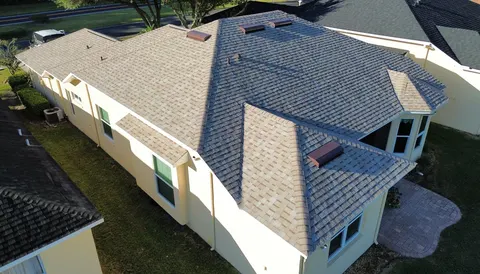
Roof Replacement
Full tear-off, decking inspected and repaired, then a complete system installed — usually one to two days on a typical Florida single-family home.
See detailsGuide
For most Florida homes, architectural shingle is the right answer: it is the cheapest to install at roughly $11,000–$20,000 on a 22–26 square roof, performs well in wind when correctly fastened, and lasts 15–20 years here. Concrete tile runs $25,000–$55,000 but the tiles last 40–50 years. Standing-seam metal runs $20,000–$45,000 and lasts 40–60-plus, which makes it the best long-run value if you are staying put.
Step 1 of 2
Pricing your roof…
One momentThey will want to walk the roof: the drainage, the access and the deck are what price a flat system, and none of it shows up from the air.
One contract, one company responsible — JAC is a licensed general contractor as well as a roofer.
You are outside Tampa Bay and Central Florida, so this is a call rather than a price. Someone will tell you straight whether we can get to you.
If we cannot, we will say so and point you at someone who can. A roofer who drives two hours to a job is a roofer who is not there when it leaks.
A roofer from the Tampa Bay office will call you to book your free inspection. You get the same written roof report, photographed slope by slope, and a fixed price once someone has actually been on the roof.
We do not show an instant price on the Gulf Coast. The aerial pricing tool only covers Central Florida, and a number we cannot stand behind is worse than no number at all.
Nobody turns up unannounced. An estimator calls you at a time you agree to, with the price.
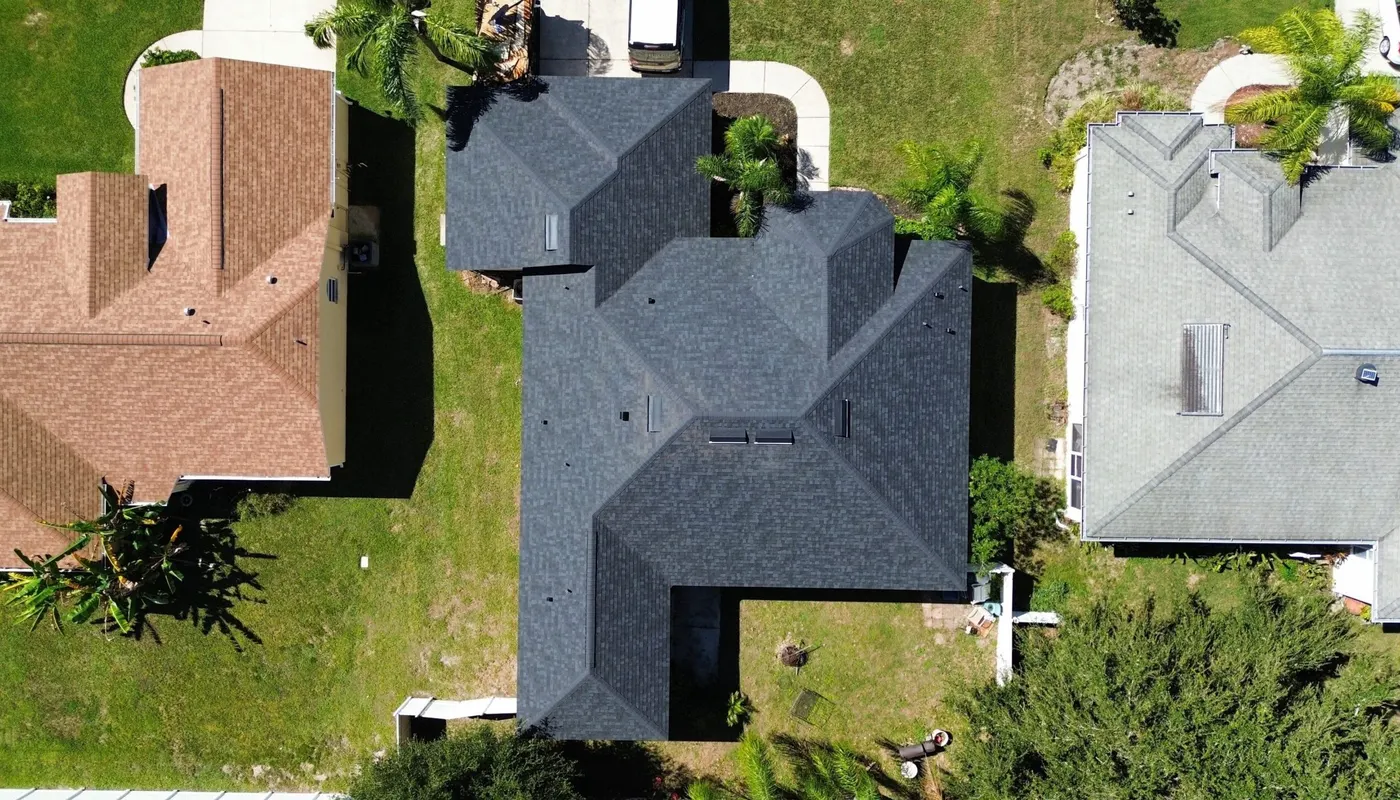
Over a 40-year ownership you buy roughly two to three shingle roofs, one standing-seam metal roof, or one tile roof plus one or two re-underlayments at 40–60% of a full tile replacement each time. That arithmetic usually favours metal, which is exactly why the up-front price feels so different from the lifetime price. It favours shingle if you are moving inside ten years.
All three can be installed to high wind ratings under current Florida code. Standing-seam metal with concealed clips generally rates highest. Correctly nailed architectural shingle over a sealed deck performs far better than its reputation. Tile is heavy and stable but individual tiles can become debris in extreme wind.
Concrete tile runs roughly 9–12 lb per square foot; shingle is around 2–3 and metal around 1–2. Going from shingle to tile means a structural evaluation. Going the other way is straightforward, but check the HOA first.
Metal and light-coloured tile reflect and re-emit substantially more solar heat than dark shingle. The attic temperature difference is real; the utility-bill difference is meaningful but smaller than the marketing suggests.
A lot of Florida HOAs specify tile, or prohibit exposed-fastener metal, or restrict colour. That constraint decides more roofs in Central Florida than any technical consideration — check it before falling in love with a material.
Staying five to ten years: shingle. Staying twenty-plus and can fund it: metal. Tile-roofed neighbourhood or you want the look and the house is built for it: tile, and budget for re-underlayment at the twenty-year mark rather than treating it as a surprise.
Need this doing rather than reading about? Roof Replacement — Shingle re-roof $11k–$20k · free inspection.
It is less about material and more about the wind mitigation form — roof shape, deck attachment, roof-to-wall connection and secondary water barrier. A well-detailed modern roof of any of the three scores well. Roof age matters separately: Citizens treats shingle as old at 25 years and tile, metal and slate at 50, which is a real argument for the harder materials if you plan to stay.
Physically sometimes, but we don't recommend it. You can't inspect decking you've covered up, and decking is where Florida roofs actually fail.
The tile does — 40–50 years for concrete and commonly 75-plus for clay. The underlayment under it does not: 20–25 years for a modern system and as little as 8–12 for organic felt in Florida heat. That is the part that keeps water out, and the part your insurer is really asking about when it asks your roof's age.
Full tear-off, decking inspected and repaired, then a complete system installed — usually one to two days on a typical Florida single-family home.
See details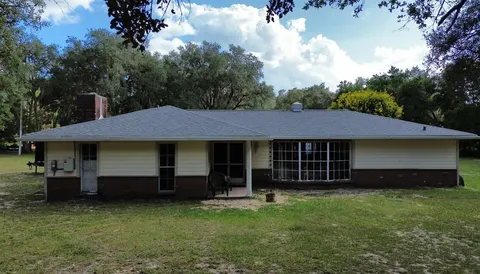
Pipe boots, lifted ridge cap, failed valley flashing, cracked tiles. We fix what is broken, and say so plainly when a repair is only buying months.
See details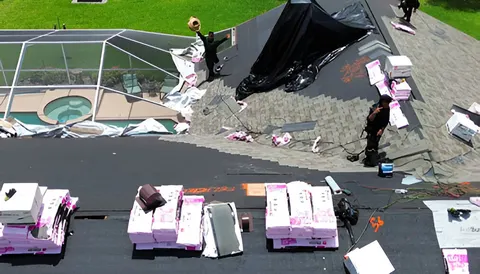
Tarp and dry-in first, then photograph the roof plane by plane and put it in writing — a report you can hand straight to your insurance carrier.
See details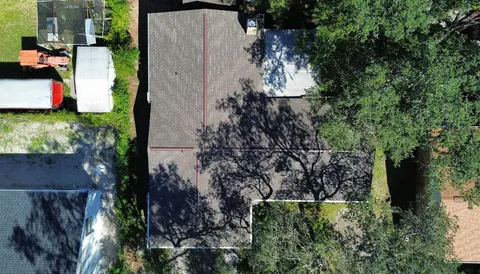
A written, photographed report on every slope, flashing and penetration, with the remaining life. Free, and yours to keep whether you hire us or not.
See details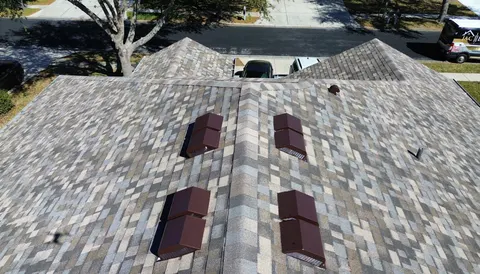
Architectural shingle installed as a complete system: underlayment, fastening pattern, metal and ventilation. Owens Corning Platinum Preferred.
See details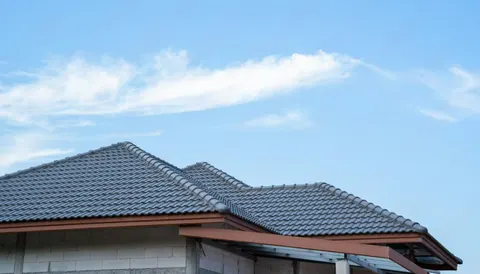
On tile the underlayment is the waterproofing, so most Florida tile work is re-underlayment: tiles off, a new system down, the same tiles back on.
See details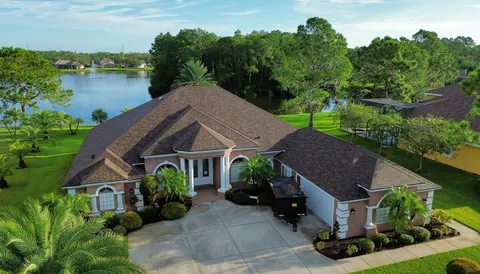
Standing seam and 5V crimp — 40 to 70 years, high wind ratings, and it sheds heat instead of holding it. Two to three times shingle up front.
See details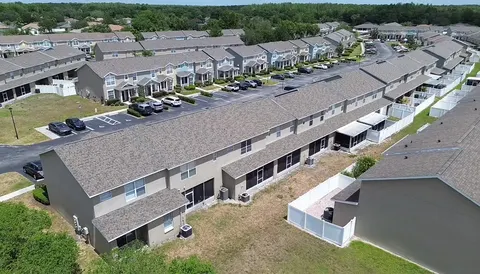
TPO, modified bitumen and flat systems, phased building by building so tenants keep trading and every unit is dried in before we leave each night.
See details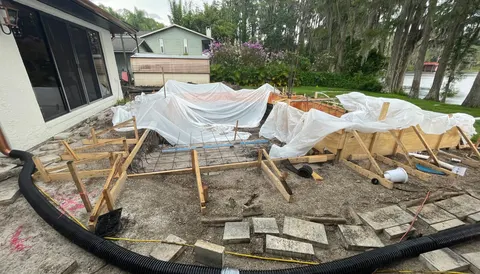
Gutters, soffit and fascia, re-roofing under an existing solar array, and the interior damage under a leak. We hold the general contractor's licence, so it is one contract, not two.
See detailsMon–Fri 8am–5pm · Sat 8am–12pm · storm and active-leak calls answered after hours. Call Tampa Bay on (813) 920-9644 — or send your address and we'll come and look at it.