Roof Requirements for Homeowners Insurance in Florida: 2026 Guide to Roof Age, 4-Point and Wind Mitigation Inspections
Quick answer: In Florida, an insurance company can’t refuse to issue or renew your homeowners policy solely because of your roof’s age if the roof is less than 15 years old. If your roof is 15 years or older, you can have it inspected, and if the inspection shows at least 5 years of useful life remaining, the insurer can’t refuse coverage based on age alone. Citizens Property Insurance has its own limits: 25 years for shingle roofs and 50 years for tile, metal, slate and concrete roofs.
If you own a home in Tampa Bay or Central Florida, your roof has more influence over your insurance than almost any other part of the house. Insurers look closely at roof age and condition because the roof is your home’s first line of defense against hurricanes, tropical storms and heavy summer rain. An aging roof can lead to a higher premium, a request for an inspection or even a non-renewal notice.
This guide explains Florida’s roof insurance rules in plain English, what 4-point and wind mitigation inspections actually check, and what to do if your insurer says your roof needs attention.
Insurance guidelines vary by carrier and can change. Always confirm your policy’s requirements with your insurance agent.
How Old Can a Roof Be for Insurance in Florida?
Florida law sets a clear baseline. Under Section 627.7011, Florida Statutes, which applies to policies issued or renewed on or after July 1, 2022:
- Roofs less than 15 years old: An insurer can’t refuse to issue or renew a homeowners policy solely because of the roof’s age.
- Roofs 15 years or older: Before requiring a roof replacement, the insurer must allow you to have the roof inspected by an authorized inspector at your own expense.
- 5 years of useful life: If that inspection shows the roof has 5 or more years of useful life remaining, the insurer can’t refuse to issue or renew your policy solely because of roof age.
Two Details Florida Homeowners Often Miss
- “Solely because of age” matters. The law protects you from being dropped just because of your roof’s age. It doesn’t stop an insurer from acting on the roof’s condition, such as active leaks, missing shingles or storm damage. That’s why regular maintenance and timely roof leak repair are so important in Florida.
- Repairs don’t reset your roof’s age. Under state law, roof age is based on the last date 100% of the roof was built or replaced to building code. A patch or partial repair won’t make an older roof new in your insurer’s eyes.
Not sure how much life your roof has left? Our guide on how long a roof lasts in Florida breaks down typical lifespans for shingle, metal, tile and flat roofs.
Citizens Insurance Roof Requirements
Citizens Property Insurance Corporation, Florida’s state-backed insurer, has its own roof eligibility rules on top of state law. Based on Citizens’ inspection requirements, here’s how roof age is treated:
| Roof Type | Age That Triggers Extra Documentation | What You Need |
|---|---|---|
| Shingle and other “soft” roofs | 25+ years | A Roof Inspection Form from a Florida-licensed inspector showing at least 5 years of remaining useful life |
| Tile, slate, clay, concrete and metal (“hard” roofs) | 50+ years | A Roof Inspection Form from a Florida-licensed inspector showing at least 5 years of remaining useful life |
A few more Citizens rules worth knowing:
- If the inspection shows less than 5 years of remaining life, Citizens requires proof of a full roof replacement before it will issue the policy.
- A passing inspection extends eligibility for a maximum of 5 years.
- If only part of the roof was replaced, Citizens bases the roof’s age on the oldest part of the roof.
What Is a 4-Point Inspection in Florida?
A 4-point inspection gives your insurer a snapshot of the four systems insurers focus on most in older homes:
- Roof
- Electrical
- Plumbing
- HVAC (heating, ventilation and air conditioning)
The inspector records the age, type and condition of each system. Citizens requires a 4-point inspection for homes more than 20 years old, and many private insurers ask for one on older homes too. The exact age threshold varies by insurance company.
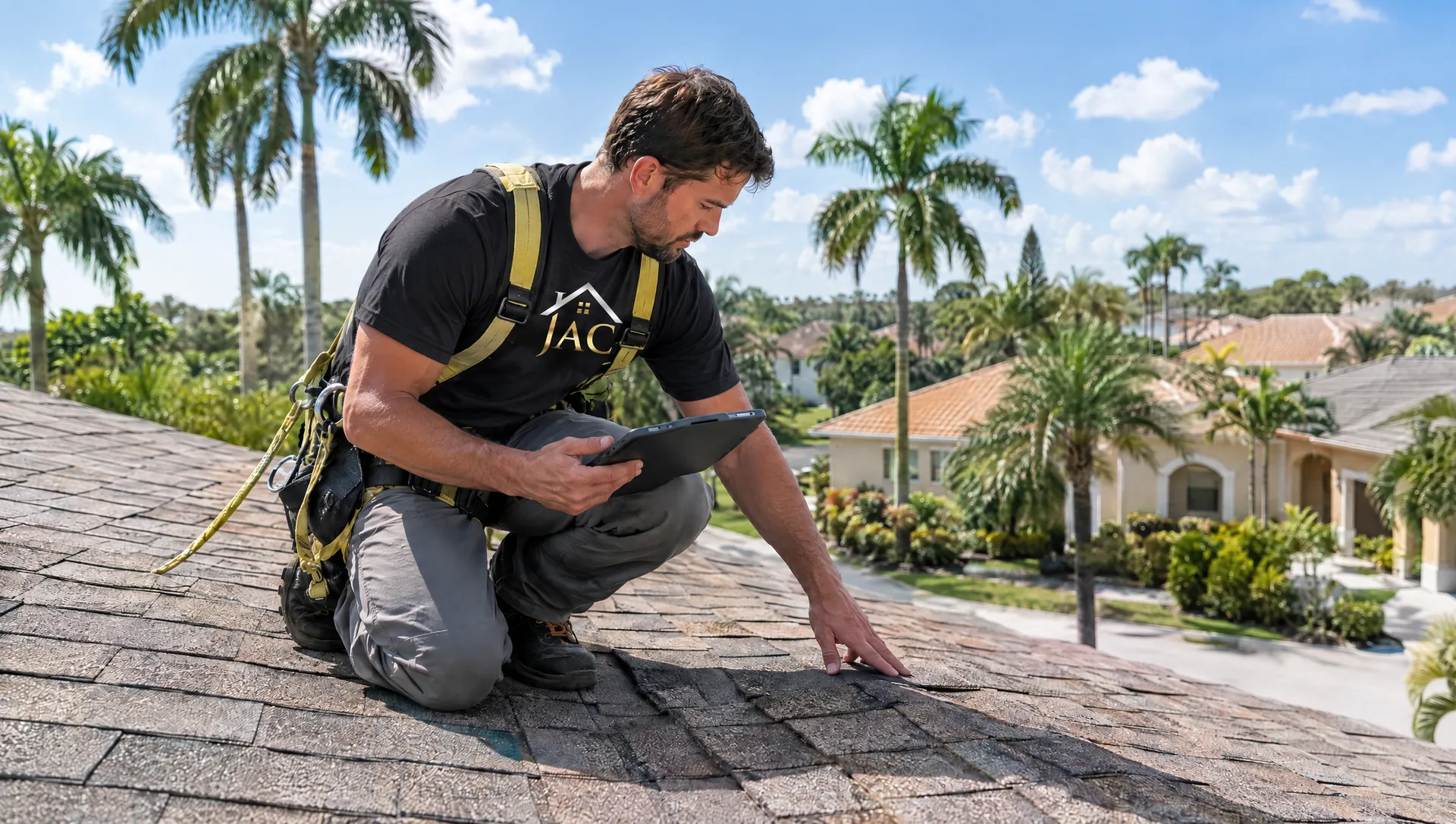
What the Inspector Checks on Your Roof
- Roof covering material and approximate age
- Whether the roof was fully or partially replaced, and when
- Curling or cupping shingles and heavy granule loss
- Missing, loose or cracked shingles or tiles
- Soft spots in the roof decking
- Signs of active leaks or water damage
- An estimate of remaining useful life
Serious problems such as active leaks or moisture damage usually need to be repaired before an insurer will accept the application. That’s why many homeowners book a free roof inspection with a roofer first, so any issues can be fixed before the official 4-point inspection.
What Is a Wind Mitigation Inspection?
A wind mitigation inspection documents the features of your home that help it resist hurricane-force winds. Florida law requires insurers to offer discounts for qualifying features, so a strong report can lower the windstorm portion of your premium.
Inspectors record their findings on the state’s Uniform Mitigation Verification Inspection Form (OIR-B1-1802). According to the Florida Office of Insurance Regulation, the form is valid for up to 5 years as long as no material changes are made to the home. A revised version of the form took effect on April 1, 2026, based on an updated statewide wind-loss mitigation study.
The 7 Areas a Wind Mitigation Inspection Covers
- Building code: Whether the home was built to the Florida Building Code
- Roof covering: The type of roof covering and whether it meets code
- Roof deck attachment: How the roof decking is fastened to the frame
- Roof-to-wall attachment: How the roof is tied to the walls (for example, clips or straps)
- Roof geometry: The shape of your roof, such as hip or gable
- Secondary water resistance (SWR): An extra barrier that helps keep water out if shingles or tiles blow off
- Opening protection: Shutters, impact windows and impact-rated doors
Five of those seven areas are about the roof itself. That makes a roof replacement one of the best opportunities to improve your wind mitigation results. A new roof installed to current code may qualify for credits your old roof didn’t, so ask your roofer what will be installed and schedule a new wind mitigation inspection once the job has passed final inspection.
How Much Does a Wind Mitigation Inspection Cost?
Most homeowners pay between $85 and $125 for a wind mitigation inspection, with an average of about $100. A combined wind mitigation and 4-point inspection typically costs $150 to $200 (Angi). The state’s My Safe Florida Home program also offers free wind mitigation inspections and grants for eligible homeowners.
4-Point Inspection vs Wind Mitigation Inspection
| 4-Point Inspection | Wind Mitigation Inspection | |
|---|---|---|
| Purpose | Shows the insurer the condition of major systems in an older home | Documents wind-resistant features that can earn premium discounts |
| What it covers | Roof, electrical, plumbing and HVAC | Building code, roof covering, roof deck and roof-to-wall attachment, roof shape, secondary water resistance and opening protection |
| When it’s needed | Often required for older homes (Citizens: more than 20 years old) | Optional, but it’s how you qualify for wind mitigation discounts |
| Can it lower your premium? | Not directly. It helps you qualify for coverage. | Yes, through mitigation credits |
| Typical cost | About $85 to $125 for wind mitigation alone, or $150 to $200 for both inspections together | |
What to Do If Your Insurer Says Your Roof Is Too Old
Getting a roof-related notice from your insurer is stressful, but you usually have more options than you think. Here’s a step-by-step plan:
- Confirm your roof’s actual age. Look for your roofing permit, the original installation invoice or your home purchase documents. The date of the last full roof replacement is what counts.
- Get the requirement in writing. Ask your agent exactly what the insurer needs, whether an inspection form is acceptable and what the deadline is.
- Book a roof inspection. If your roof is 15 years or older, Florida law gives you the right to an inspection by an authorized inspector before the insurer can require a replacement.
- Repair what can be repaired. Leaks, damaged flashing and missing shingles can often be fixed. If the damage came from a recent storm, our storm damage restoration team can assess it.
- Plan early if you need a new roof. Permits, materials and scheduling take time, especially during hurricane season. Our guide to roof replacement costs in Tampa can help you budget, and roof financing options are available.
- Send your insurer the paperwork. After a replacement, share the final permit, your invoice and a new wind mitigation report so your policy reflects the new roof.
Does a New Roof Lower Insurance in Florida?
Often, yes, although the amount depends on your insurer and your home. A new roof resets your roof’s age, can remove the need for extra roof inspections, and may qualify for wind mitigation credits an older roof couldn’t. The material you choose matters too, since shingle, metal and tile roofs perform differently in high winds. Our residential roofing services page covers the roof types we install across Florida.
Work With a Licensed Florida Roofing Contractor
Florida law lists roofing contractors among the professionals who can act as authorized roof inspectors, as long as your insurer approves them. JAC Builders is a licensed Florida roofing contractor (License #CCC1334352) and general contractor (License #CGC1531030), and an Owens Corning Preferred Contractor.
We serve homeowners in Tampa, St. Petersburg, Orlando and communities across the Gulf Coast and Central Florida. Whether your insurer has asked for an inspection or you want to know where your roof stands before renewal time, our team will inspect your roof, explain what we find and repair or replace it to current Florida Building Code.
Worried about your roof and your next insurance renewal? Schedule your free roof inspection or call us at (813) 920-9644 (Tampa) or (321) 468-7062 (Orlando).
Frequently Asked Questions
Can my insurance company drop me because of my roof’s age in Florida?
Not if your roof is less than 15 years old and age is the only reason. For roofs 15 years or older, you can have the roof inspected, and if it has at least 5 years of useful life left, the insurer can’t refuse or non-renew your policy based on age alone. Insurers can still act on roof condition or damage.
Does a 4-point inspection include the roof?
Yes. The roof is one of the four systems covered, along with electrical, plumbing and HVAC. The inspector notes the roof’s material, age, condition and any signs of leaks.
How long is a wind mitigation inspection good for in Florida?
A wind mitigation report on Form OIR-B1-1802 is valid for up to 5 years, as long as no material changes are made to the home and no inaccuracies are found on the form.
Who can do a roof inspection for insurance in Florida?
Under Florida law, an authorized inspector must be approved by your insurer and can include licensed home inspectors, building code inspectors, general, building, residential or roofing contractors, engineers and architects. Check with your insurer before booking to confirm which professionals it accepts.
Does a roof repair reset my roof’s age?
No. Under Florida law, roof age is based on the last date the entire roof was built or replaced to code. Citizens also bases roof age on the oldest part of the roof when only part of it was replaced.
How much does a wind mitigation inspection cost in Florida?
Most homeowners pay $85 to $125, and a combined wind mitigation and 4-point inspection usually costs $150 to $200. Eligible homeowners may qualify for a free inspection through the My Safe Florida Home program.